
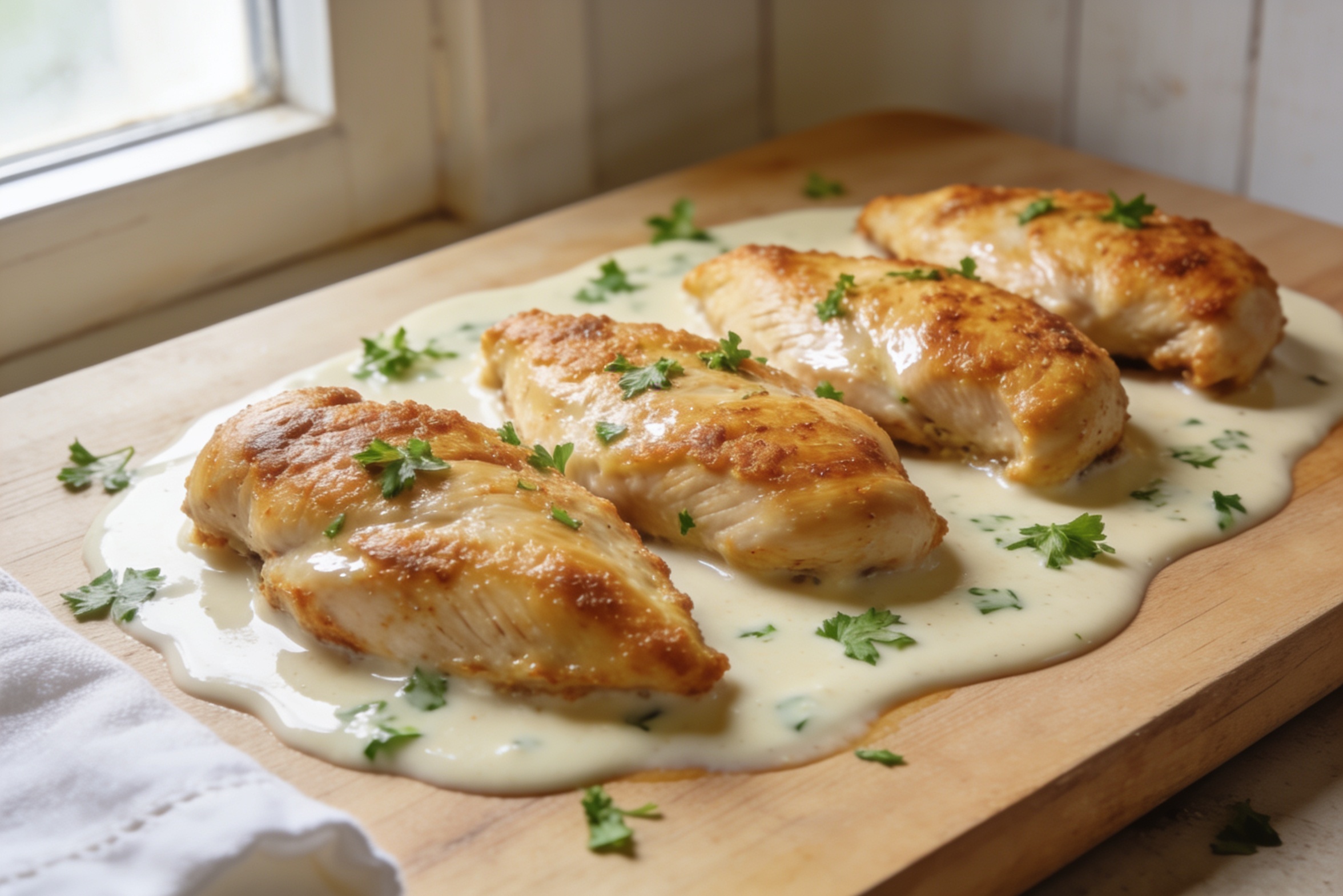
Restaurant-quality chicken that tastes like you spent all afternoon cooking, but doesn't. Mary Berry's white wine chicken relies on a few key ingredients and a gentle simmer to transform plain chicken breasts into something silky and rich. The sauce does all the work: cream, mustard, and white wine building layers of flavour that taste far more fussy than they actually are.
Why You’ll Love White Wine Chicken
- Done in under an hour: the whole dish from raw chicken to plated comes together in roughly forty-five minutes, no faffing about
- Restaurant flavour at home: that silky cream sauce with white wine and mustard feels special enough for guests but simple enough for Tuesday
- One pan, most of the work: sear the chicken, build the sauce in the same spot, then let everything braise gently together
- Forgiving and flexible: chicken breasts cook evenly, the sauce is hard to mess up, and it reheats beautifully without drying out
- Pairs with almost anything: serve it over rice, egg noodles, mash, or just with crusty bread to soak up every drop of sauce
Ingredients
This is a straightforward braise built on pantry staples. You need four decent chicken breasts, some butter and oil for searing, a few aromatics, white wine, stock, and cream. The mustard adds a quiet tang that stops the sauce from feeling heavy. Fresh parsley finishes it, though frozen works in a pinch.
- 4 chicken breasts, about 175g each, skin removed
- 2 tbsp olive oil
- 20g butter
- 1 onion, peeled and chopped into roughly 5mm pieces
- 2 garlic cloves, peeled and crushed
- 1 tbsp plain flour
- 150ml dry white wine, a crisp white you would actually drink
- 200ml chicken stock, homemade or shop-bought
- 150ml double cream, cold
- 1 tsp Dijon mustard
- Salt and black pepper to season
- Fresh parsley, chopped, for garnish
The white wine is important: acidic and fruity, not sweet. A Sauvignon Blanc or Pinot Grigio works well. If you do not have double cream, single cream mixed with a splash of crème fraîche will do, though the sauce will be thinner. Dijon mustard is worth buying proper. It is sharper than English mustard and works here.
Equipment You’ll Need
- Large frying pan or shallow casserole, about 28–30cm: wide enough to hold the four chicken breasts in one layer, so they sear evenly without steaming
- Wooden spoon or silicone spatula: for stirring the sauce and scraping the fond from the bottom
- Measuring jug or small bowl: to have your stock and cream ready before you start
- Meat thermometer, optional but useful: inserted into the thickest part of a breast, it should read 75°C when cooked
Some equipment links are Amazon affiliate links, at no extra cost to you.
How to Make Mary Berry White Wine Chicken
-
Season the chicken breasts generously with salt and pepper on both sides. Pat them dry with kitchen paper first so they will brown rather than steam. Wet chicken makes pale, rubbery chicken.
-
Heat the oil and butter in a large frying pan over medium-high heat until the butter foams. Let it get hot enough that a piece of chicken sizzles immediately when it hits the pan. If you add cold chicken to lukewarm fat, it will stick.
-
Lay the chicken breasts in the pan in a single layer and cook for 5 to 6 minutes without moving them. They should turn a deep golden brown on the underside. Once brown, flip and cook the other side for another 5 to 6 minutes until golden. The chicken will not be cooked through yet, just browned. Transfer to a plate.
-
In the same pan, cook the chopped onion over medium heat for 3 to 4 minutes, stirring often, until soft and pale. Do not let it brown. Add the crushed garlic and cook for another minute until fragrant. The fond stuck to the bottom of the pan is flavour you want to keep.
-
Sprinkle the flour over the onion and garlic, stir well, and cook for 1 minute. This stops the flour from clumping and removes the raw taste. You are making a paste-like base for the sauce.
-
Pour in the white wine and use your spoon to scrape up every browned bit stuck to the bottom of the pan. Simmer for 2 to 3 minutes, stirring often, until the wine reduces by about half and smells less sharp. You are cooking off some of the alcohol so it tastes round, not harsh.
-
Add the stock and stir well to combine. Bring to a gentle simmer. Taste and season with a pinch of salt and pepper. It should taste salty and savoury, like a light broth, not bland.
-
Return the chicken breasts to the pan, nestled into the liquid. They should sit on the bottom, half-submerged or half-covered by liquid. Reduce the heat to medium-low, put a lid on the pan (or cover loosely with foil), and simmer for 12 to 15 minutes. The chicken will finish cooking gently in the steam and liquid. Pierce the thickest part with a knife. The juices should run clear, no pink.
-
Remove the pan from the heat and stir in the cold double cream and Dijon mustard. Do this off the heat so the cream does not split or curdle from sitting over direct heat too long. Stir gently until smooth. Taste and adjust the salt, pepper, or mustard to your liking.
-
Return the pan to low heat just long enough to warm the sauce through, about 1 to 2 minutes, stirring gently. Do not let it simmer hard or the cream will break. You are just taking the chill off.
-
Scatter the fresh chopped parsley over the top and serve hot from the pan. Pour a spoonful of the sauce over each breast so everyone gets the creamy, rich sauce.
Tips for the Best Results
- Do not skip browning the chicken: golden colour means flavour. A grey, steamed chicken breast tastes dull even with the best sauce around it.
- Keep the heat gentle during the simmer: a rolling boil will toughen the chicken and makes the cream more likely to split or separate.
- Add cold cream off the heat: letting cold cream hit a hot pan can cause it to break. Remove the pan first, then stir it in.
- Make it ahead and reheat gently: the dish tastes even better the next day. Reheat over low heat, stirring now and then, until it just starts to steam. The cream will stay smooth if you do not rush it.
Storing and Freezing
White wine chicken keeps in an airtight container in the fridge for up to three days. Reheat it gently over a low heat, stirring occasionally, until it reaches a gentle simmer. You can freeze it for up to two months. Cool it completely first, then transfer to a freezer-safe container or a labelled freezer bag. Thaw overnight in the fridge before reheating. If the sauce looks thin after thawing, mix a small spoonful of cornflour with a little cold water, stir it in over low heat, and let it simmer for a minute until it thickens.
For best results, freeze before adding the parsley garnish. You can make the whole dish up to the point where you stir in the cream, freeze that base, then finish with the cream when you reheat it. This keeps the sauce silkier. It takes about twenty minutes to reheat from frozen if you do it gently over a low-to-medium flame, stirring every few minutes.
Substitutions and Variations
Swap the chicken breasts for skinless, boneless thighs if you prefer darker meat that stays moister. Use half white wine and half apple juice if you want something slightly sweeter and less acidic. Swap single cream for double if you like a richer sauce, or use crème fraîche for a subtle tang. Add a handful of mushrooms (sliced and cooked with the onion) or a few capers stirred in at the end for extra depth.
What to Serve With It
Serve white wine chicken over buttered egg noodles, fluffy rice, creamy mashed potato, or polenta. Plain steamed broccoli or green beans on the side work well, though honestly the sauce is rich enough that you might just want crusty bread to soak it up. A simple green salad dressed with lemon and oil cuts through the creaminess nicely. If you want something warm, roasted root vegetables or sautéed spinach are both good choices.
Frequently Asked Questions
Can I use chicken thighs instead of breasts?
Yes. Use bone-in, skin-on thighs and increase the simmering time to 18 to 20 minutes so they cook through. Thighs are forgiving and stay juicy. Remove the skin before serving if you prefer, or leave it on for more flavour.
What if I do not have white wine?
Use extra chicken stock or half stock and half dry cider. Avoid red wine, which will turn the sauce grey and muddy. If you have vermouth, that works too. The wine adds acidity and depth, so skipping it entirely will make the sauce taste flatter.
Can I make this without cream?
Yes, but the texture will be thinner and less luxurious. Skip the cream and instead mix a tablespoon of cornflour with a little cold stock, stir it in after the wine has simmered, and let it bubble gently for a minute. The sauce will be lighter but still coat the chicken.
How do I know when the chicken is fully cooked?
Pierce the thickest part with a small knife or skewer. If the juices run clear and the meat is opaque all the way through, it is done. A meat thermometer should read 75°C. Do not rely on colour alone: overcooked chicken is dry, so check early and often during the simmer.
Final Thoughts
white wine chicken proves that elegant dinner does not mean complicated. Four ingredients make the sauce, one pan holds everything, and forty-five minutes later you have something that tastes like you know what you are doing in the kitchen. It is the kind of dish that feels like a treat on a quiet weeknight and impressive enough to serve to guests without any fuss.
The beauty of this recipe is that it improves with a day's rest in the fridge, the flavours settling and deepening. Make it ahead if you are entertaining, then all you have to do is reheat gently while you pour a glass of that same white wine you used for cooking.
Mary Berry White Wine Chicken
Prep 15 min · Cook 40 min · Total 55 min · 4 servings
Main Course · British · 385 kcal per 1 chicken breast with sauce
Ingredients
- 4 chicken breasts, about 175g each, skin removed
- 2 tbsp olive oil
- 20g butter
- 1 onion, peeled and chopped into roughly 5mm pieces
- 2 garlic cloves, peeled and crushed
- 1 tbsp plain flour
- 150ml dry white wine, a crisp white you would actually drink
- 200ml chicken stock, homemade or shop-bought
- 150ml double cream, cold
- 1 tsp Dijon mustard
- Salt and black pepper to season
- Fresh parsley, chopped, for garnish
Method
- Season the chicken breasts generously with salt and pepper on both sides. Pat them dry with kitchen paper first so they will brown rather than steam.
- Heat the oil and butter in a large frying pan over medium-high heat until the butter foams. Let it get hot enough that a piece of chicken sizzles immediately when it hits the pan.
- Lay the chicken breasts in the pan in a single layer and cook for 5 to 6 minutes without moving them until golden. Flip and cook the other side for another 5 to 6 minutes until golden. Transfer to a plate.
- In the same pan, cook the chopped onion over medium heat for 3 to 4 minutes, stirring often, until soft and pale. Add the crushed garlic and cook for another minute until fragrant.
- Sprinkle the flour over the onion and garlic, stir well, and cook for 1 minute. This stops the flour from clumping and removes the raw taste.
- Pour in the white wine and use your spoon to scrape up every browned bit stuck to the bottom of the pan. Simmer for 2 to 3 minutes until the wine reduces by about half.
- Add the stock and stir well to combine. Bring to a gentle simmer. Taste and season with a pinch of salt and pepper.
- Return the chicken breasts to the pan, nestled into the liquid. Reduce the heat to medium-low, cover loosely, and simmer for 12 to 15 minutes until the chicken is cooked through.
- Remove the pan from the heat and stir in the cold double cream and Dijon mustard. Stir gently until smooth. Taste and adjust seasoning.
- Return the pan to low heat just long enough to warm the sauce through, about 1 to 2 minutes, stirring gently.
- Scatter the fresh chopped parsley over the top and serve hot from the pan with the sauce spooned over each breast.